
Making the Most of Indoor Recess: Movement, Belonging & Joy—Rain or Shine

Recess shouldn’t stop just because it’s raining. When outdoor time isn’t possible, indoor recess becomes a powerful opportunity to keep kids moving, connecting, and recharging, even in small spaces.
Movement is essential to children’s physical and mental well-being. It supports focus, emotional regulation, social connection, and executive functioning. For many students, especially in high-stress environments, recess is more than just a break; it’s a chance to reset and feel good.

Illustration of a child playing with a hula hoop.

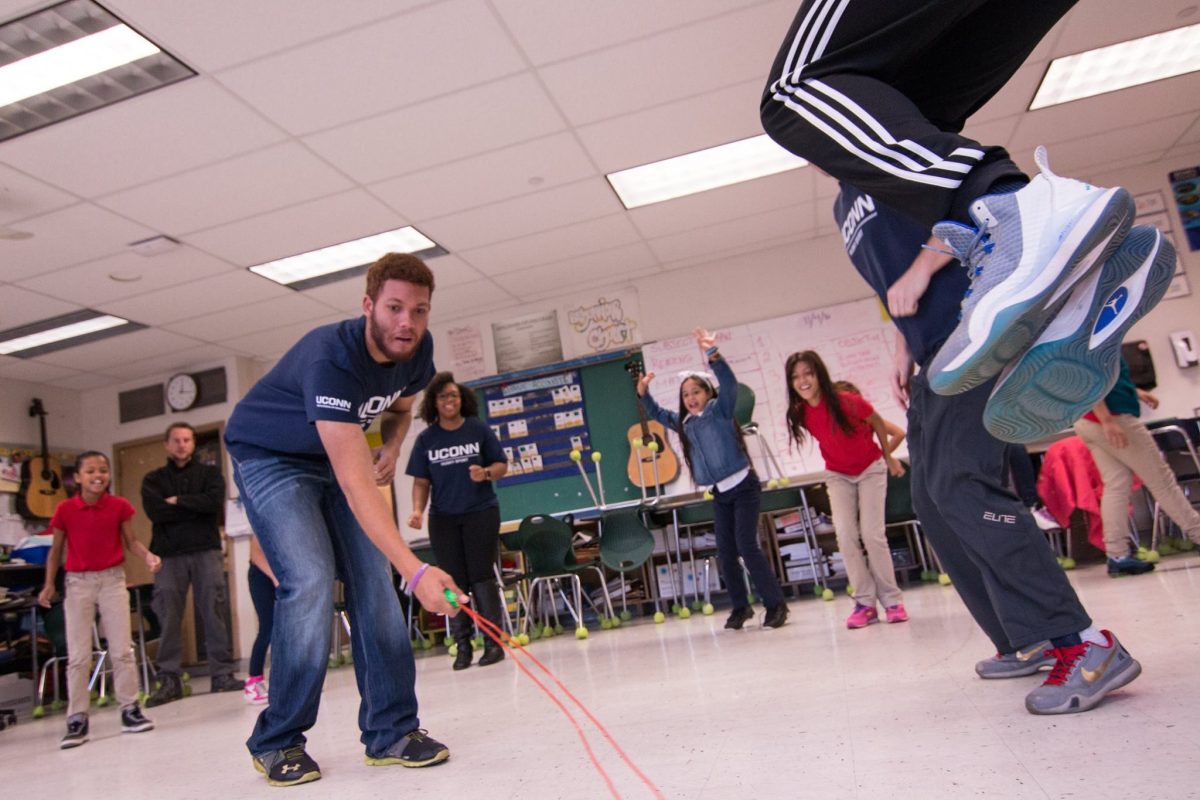
Image of kids in a classroom playing jump rope.

Why Indoor Recess Matters

The CDC recommends kids get at least 60 minutes of activity daily. Indoor recess helps by:

  • Resetting brains and bodies after long periods of seated lessons
  • Lowering stress and improving mood
  • Building friendships through play
  • Honoring sensory needs for diverse student ability

Keys to a Great Indoor Recess

To make indoor recess equitable and engaging:

  • Choice: Offer multiple types of activities—active, creative, quiet, and social.
  • Inclusion: Use games that all bodies and abilities can enjoy.
  • Voice: Let students suggest or lead activities.
  • Belonging: Encourage games that are fun, low-pressure, and collaborative.

Activity Ideas

Movement and Energy

      • Dance Party (student DJs pick songs)
      • Movement Dice or Fitness Bingo
      • Animal Movement Races (crab walks, bear crawls, frog jumps)
      • Follow-the-Leader Movement Chains
      • YouTube dance-alongs (like GoNoodle, Kidz Bop, or Just Dance Kids)

Creative and Cooperative

      • Build Zones with recycled materials or classroom blocks
      • Silent Charades or Mirror Movements
      • Collaborative drawing (giant mural paper or sidewalk chalk on butcher paper)
      • "Invent a Game" challenge (students make and teach their own movement game)

Calm and Regulation

      • Sensory path on tape or paper
      • Seated yoga or breathing breaks (e.g., “rainbow breathing” or “lazy 8s”)
      • Storytime stretch or read-aloud with calming music
      • Visual puzzle or coloring corner (for students who need a break from stimulation)

Leadership Roles

      • Recess Leader: chooses warm-up or dance
      • Equipment Captain: hands out and collects supplies
      • Kindness Scout: gives shout-outs during or after recess
      • Music Master: sets up playlist or calming sounds

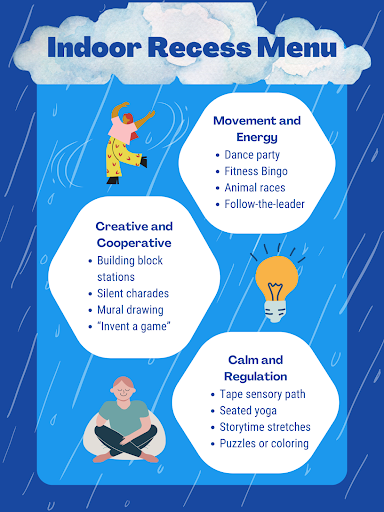
Image of a graphic of an indoor recess menu and the options it provides.

Pro tip:

Post an “Indoor Recess Menu” in the classroom so students know what’s available on rain/snow days.

Tips for Managing Indoor Recess Smoothly

  • Use visuals and clear voice cues to signal transitions.
  • Set up zones or “centers” around the room to reduce crowding.
  • Assign or rotate student helpers to set up, lead, and clean up.
  • Keep materials simple, durable, and easy to store (think: laminated yoga cards, painter’s tape, baskets of sensory objects).
  • Avoid using indoor recess as a reward or punishment. Every child deserves the chance to move, regulate, and connect—even (and especially) when behavior is a challenge.

Indoor recess isn’t a backup plan—it’s a vital part of a healthy school day. When we honor students’ need to move and connect, we promote equity, wellness, and joy that lasts far beyond the recess bell.