Why Micro-Breaks Matter
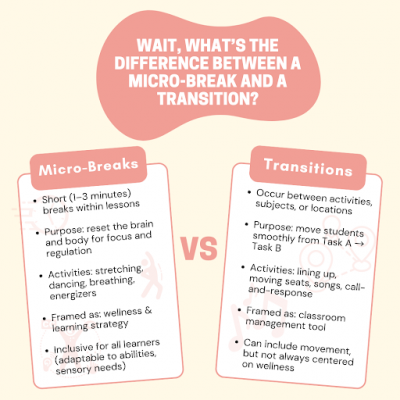
Kids aren’t built to sit still for long. Short, intentional movement breaks, sometimes called “micro-breaks” or more familiarly, brain breaks, help students reset their brains and bodies so they can focus better, regulate emotions, and stay engaged. For students in high-need settings or with diverse learning needs, these breaks aren’t just nice to have, they’re essential for equity, accessibility, and success.
What Makes a Good Micro-Break?
- Quick: 1–3 minutes, no prep or equipment needed.
- Inclusive: Adaptable for all bodies and energy levels.
- Brain-boosting: Stimulates blood flow and oxygen to the brain.
- Fun: Builds joy and connection, not just compliance.

5 Movement Moments for Any Classroom
1. Shake-Off & Reset
-
- Have students stand, stretch their arms high, and shake their hands, arms, and legs for 30 seconds.
- Why it works: Releases tension and helps regulate energy after long seated work.
- Accessibility tip: Students can shake just their hands, fingers, or head if seated.
2. Follow the Leader Moves
-
- Choose a student leader to guide 4–5 quick moves (jumps, stretches, spins). Rotate leaders so everyone has a turn.
- Why it works: Builds executive functioning (sequencing, attention) and social connection.
- Equity tip: Invite leaders to bring in a move from their culture or family tradition (e.g., a dance step).
3. Chair Stretch Break
-
- While seated, guide students through simple stretches: reach to the ceiling, touch toes, twist side to side, roll shoulders.
- Why it works: Perfect for tight spaces or classrooms without room to stand.
- Accessibility tip: Offers options for students with mobility differences.
4. Brain Boost Challenge
-
- Quick 1-minute challenge like:
- 10 jumping jacks
- 5 “cross crawls” (touch opposite knee and elbow)
- Silent “statue pose” hold for 20 seconds
- Why it works: Integrates body and brain, builds focus.
- Adaptation: Swap jumping jacks for seated marches.
- Quick 1-minute challenge like:
5. Dance It Out
-
- Play 1 minute of upbeat, student-selected music. Let kids move freely in their space.
- Why it works: Releases stress, sparks joy, and affirms identity.
- Cultural connection: Rotate music from different cultures represented in the class.
Final Thoughts
Micro-breaks may only take a minute, but they build a classroom culture where health, belonging, and joy matter as much as academics. When every student has a chance to move in ways that feel good, we empower their brains and bodies to do their best learning.