Archives

Lesson Plan: Plan Your Power Snack

Grade Level: K-8
Duration: 30-45 minutes

Objectives:
Students will understand how snacks support their brains through focus and energy, practice planning a healthy snack, and reflect on food choices.

MATERIALS:

●  Printed Worksheet.
●  Crayons, markers, pencils.
●  Food picture cards or stickers.
●  Chart paper or whiteboard for brainstorming.

Lesson

1. Warm-up (5-10 minutes)

a. Discuss with students: “What foods help your brain feel strong, calm, or focused?”
b. Have students share ideas aloud or in pairs.
c. Write key words on chart paper or whiteboard.
d. Discuss as a class and check off common words
e. Explain that planning snacks helps our brains function for the day.

2. Mini-lesson (10 min)

a. Define a “Power Snack” - a small meal that gives steady energy and focus. Go to HNS website for ideas!
b. Show examples from diverse cultures.
c. Introduce executive functioning skills: planning, organizing, and decision-making.

3. Independent Activity (15 min)

a. Distribute worksheet to students and guide them:

i. Draw or list 1-3 snack items
ii. Check off how the snack helps their brain or body
iii. Choose a time of day to eat it.
iv. Have them answer: “Why is this snack special to me?”

4. Sharing and Reflection (5-10 min)

a. Students turn and talk in pairs or share with the class.
b. Highlight cultural or family snack connections
c. Prompt: “How does it feel to plan your snack ahead of time?”

5. Extension (Optional)

a. Send home a short activity to put one snack together during the week. Talk about why it was
chosen and how it makes you feel. Include a note inviting families to share favorite recipes or
snack traditions.

Loader Loading...
EAD Logo Taking too long?

Reload Reload document
| Open Open in new tab

Making the Most of Indoor Recess: Movement, Belonging & Joy—Rain or Shine

Recess shouldn’t stop just because it’s raining. When outdoor time isn’t possible, indoor recess becomes a powerful opportunity to keep kids moving, connecting, and recharging, even in small spaces.
Movement is essential to children’s physical and mental well-being. It supports focus, emotional regulation, social connection, and executive functioning. For many students, especially in high-stress environments, recess is more than just a break; it’s a chance to reset and feel good.

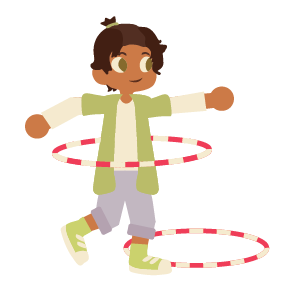
Illustration of a child playing with a hula hoop.

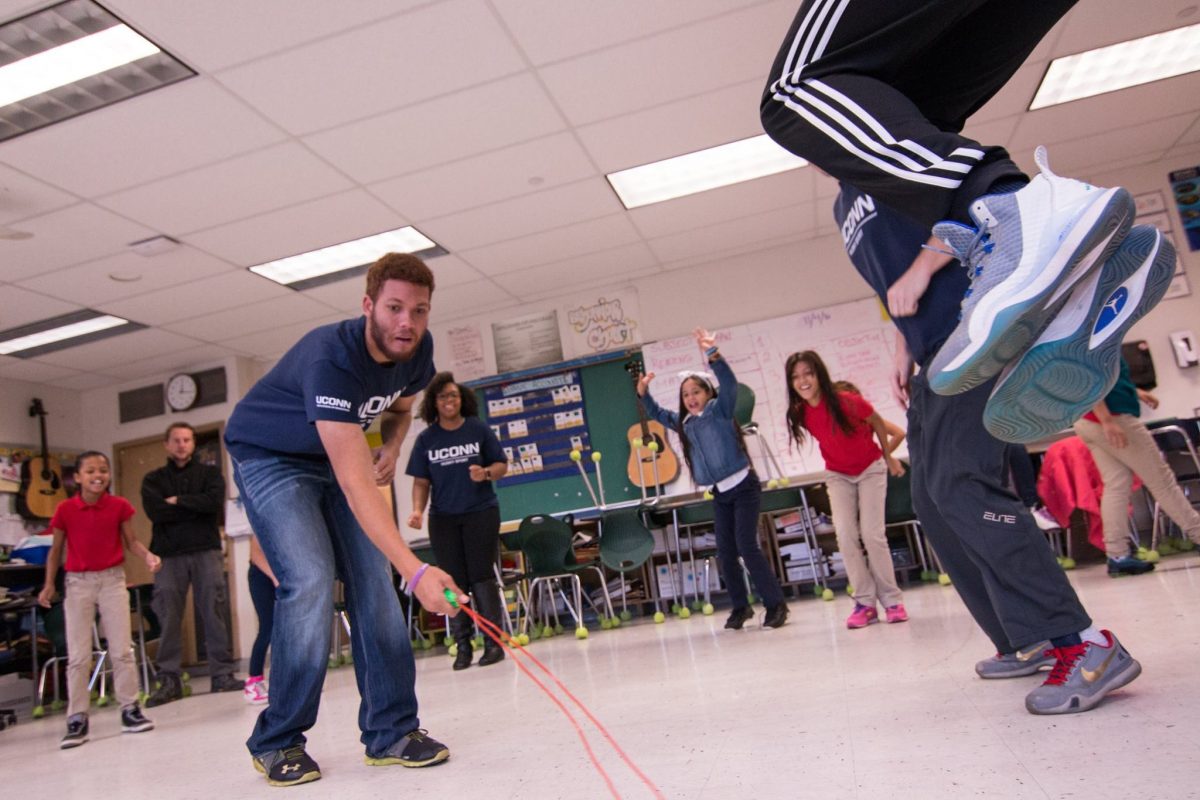
Image of kids in a classroom playing jump rope.

Why Indoor Recess Matters

The CDC recommends kids get at least 60 minutes of activity daily. Indoor recess helps by:

  • Resetting brains and bodies after long periods of seated lessons
  • Lowering stress and improving mood
  • Building friendships through play
  • Honoring sensory needs for diverse student ability

Keys to a Great Indoor Recess

To make indoor recess equitable and engaging:

  • Choice: Offer multiple types of activities—active, creative, quiet, and social.
  • Inclusion: Use games that all bodies and abilities can enjoy.
  • Voice: Let students suggest or lead activities.
  • Belonging: Encourage games that are fun, low-pressure, and collaborative.

Activity Ideas

Movement and Energy

      • Dance Party (student DJs pick songs)
      • Movement Dice or Fitness Bingo
      • Animal Movement Races (crab walks, bear crawls, frog jumps)
      • Follow-the-Leader Movement Chains
      • YouTube dance-alongs (like GoNoodle, Kidz Bop, or Just Dance Kids)

Creative and Cooperative

      • Build Zones with recycled materials or classroom blocks
      • Silent Charades or Mirror Movements
      • Collaborative drawing (giant mural paper or sidewalk chalk on butcher paper)
      • "Invent a Game" challenge (students make and teach their own movement game)

Calm and Regulation

      • Sensory path on tape or paper
      • Seated yoga or breathing breaks (e.g., “rainbow breathing” or “lazy 8s”)
      • Storytime stretch or read-aloud with calming music
      • Visual puzzle or coloring corner (for students who need a break from stimulation)

Leadership Roles

      • Recess Leader: chooses warm-up or dance
      • Equipment Captain: hands out and collects supplies
      • Kindness Scout: gives shout-outs during or after recess
      • Music Master: sets up playlist or calming sounds

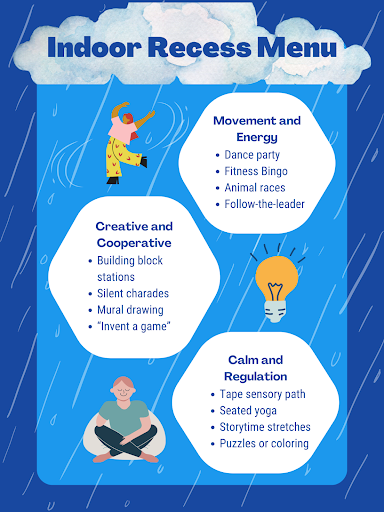
Image of a graphic of an indoor recess menu and the options it provides.

Pro tip:

Post an “Indoor Recess Menu” in the classroom so students know what’s available on rain/snow days.

Tips for Managing Indoor Recess Smoothly

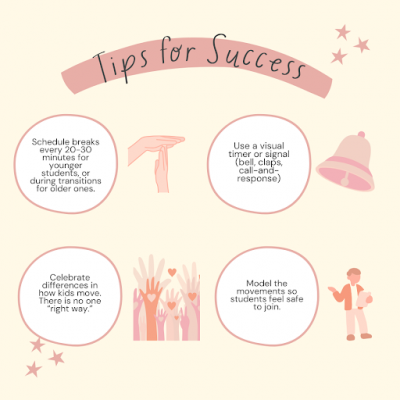
  • Use visuals and clear voice cues to signal transitions.
  • Set up zones or “centers” around the room to reduce crowding.
  • Assign or rotate student helpers to set up, lead, and clean up.
  • Keep materials simple, durable, and easy to store (think: laminated yoga cards, painter’s tape, baskets of sensory objects).
  • Avoid using indoor recess as a reward or punishment. Every child deserves the chance to move, regulate, and connect—even (and especially) when behavior is a challenge.

Indoor recess isn’t a backup plan—it’s a vital part of a healthy school day. When we honor students’ need to move and connect, we promote equity, wellness, and joy that lasts far beyond the recess bell.


Making Transitions Healthier, Happier, and More Inclusive: How We Move Through Our Day Matters

Classroom transitions, such as coming into the classroom, lining up to go to lunch or the bathroom, or cleaning up after a lesson, can set the tone and mood for the next activity, and may make educators feel a bit stressed or disorganized if there aren’t any routines in place. These can be powerful teaching moments for both students and educators to facilitate and participate in.

Using CASEL’s SEL framework as a guide, transitions are prime opportunities to build skills like self-awareness, self-management, and relationship building. 

Educators thrive from structured, daily routines, as much as students do, so what if there was a way to structure activities to give students tools for lifelong success, without focusing on classroom compliance?

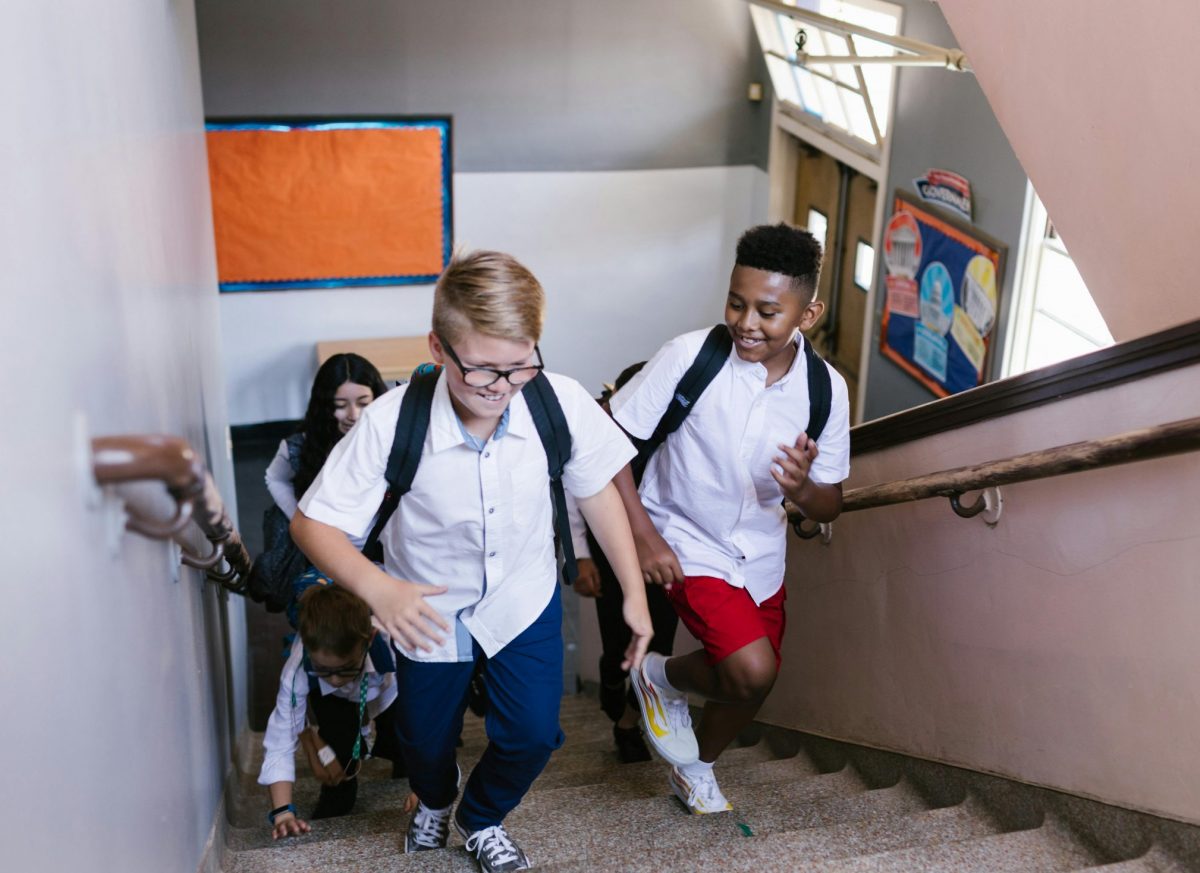
A group of children going upstairs in a school.

Why Transitions Matter:

  1. Transitions happen more than 20 times a day – that’s more than 20 times to build positive habits and relationships!
  2. This is a perfect moment to teach students self-regulation strategies, body awareness, and spatial reasoning.
  3. Adding this into a structured routine will give all students of any ability to engage in stimulating movement to promote safety and stability.

Movement = Emotional Regulation, Not Controlling Behavior

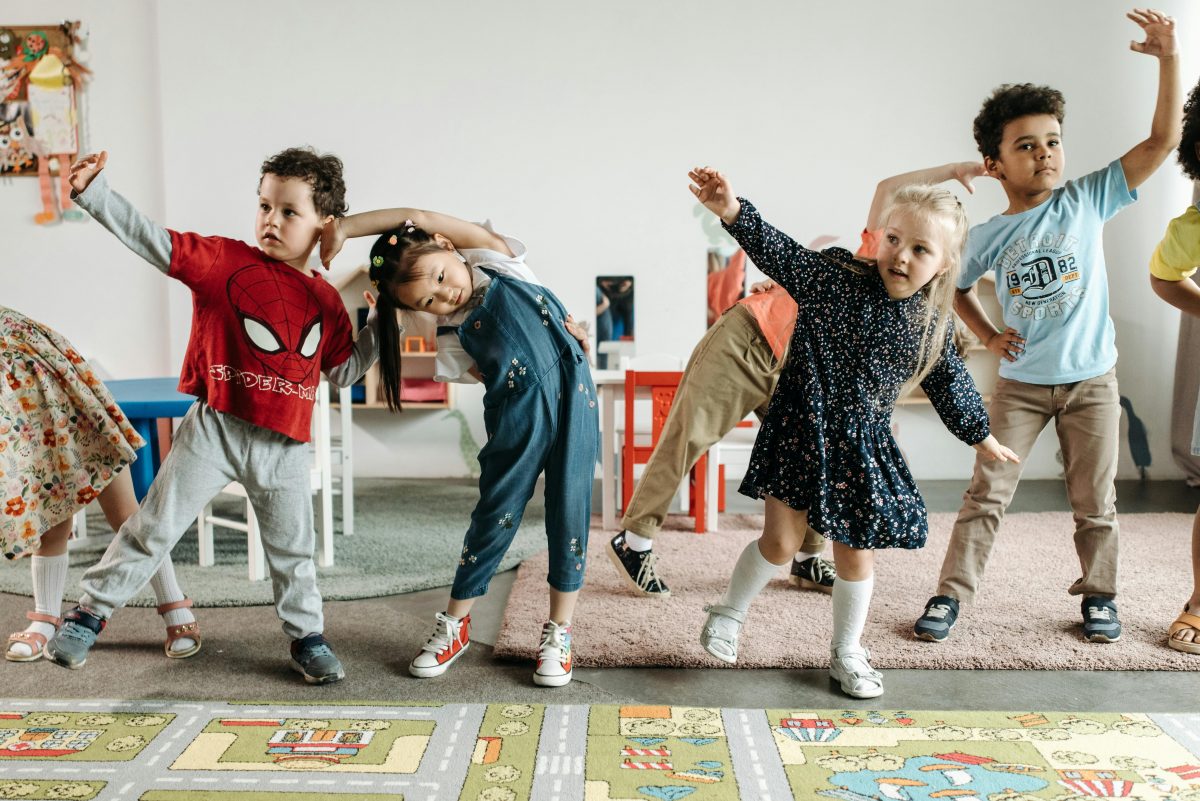
Younger children exercising in a classroom.

Transitions should promote student’s needs to stimulate blood flow to the brain. Movement is essential to children’s development and not all transitions have to be in a rigid box of “quick, quiet, and still”. This is a chance to reset students, your classroom atmosphere, or even yourself as the educator! Try:

  • 10 jumping jacks after a long seated break
  • A 1-minute “shake-off” (wiggle fingers, arms, legs)
  • Invite students to create their own transition moves
  • A little dance break

Movement supports attention and memory, especially for elementary students. Short bursts of activity can improve student focus and mood, and help to develop regulation skills as necessary for executive functioning in school settings.

Inclusive Transitions Honor All Bodies and Needs:

Transitions should try to include as many students as possible. Don’t rush them, take your time in introducing or facilitating students through it. Promote accessibility and implement trauma-informed practices for predictable and sensory-sensitive routines for students of various backgrounds to feel safe in the following ways:

  1. Visual timers or schedules, like on your daily agenda on the board!
  2. Auditory and visual reminders - “Five more minutes and then we can take a break.” while holding up five fingers.
  3. Options to move from one activity to the next - “Quietly walk, tiptoe, stomp, or bounce to the rug”, which can fulfill sensory needs of some students
  4. Bilingual prompts with visual supports for multilingual students - simple words or phrases.
  5. Soft signals, such as chimes, music, or classroom lights, instead of clapping or countdowns.

Try to combine visual, verbal, and physical cues instead of relying solely on auditory cues, for your own toolbox and promoting student engagement!


Turn Snack and Lunchtime into Healthy Habits

Mealtime transitions can reinforce health eating habits through adult modeling and behavior. The goal is to promote habits without shaming or judgement. Try:

  • Phrases like “Let’s fuel our brains”
  • Highlight a food to try from the school lunch menu for the week
  • A “Try It” tally for students who tried a new food
  • Discussion prompts: “Do you eat this at home?”

Final Thoughts

Transitions don’t only become smoother — they become more joyful, respectful, and inclusive, building positive relationships in the classroom and school community culture. In every hallway stroll or classroom clean-up, we as educators can model what it looks like to move through the world with purpose and care, through structured routines.


Movement Moments: 5 Ways to Add Micro-Breaks Into the Classroom

Why Micro-Breaks Matter

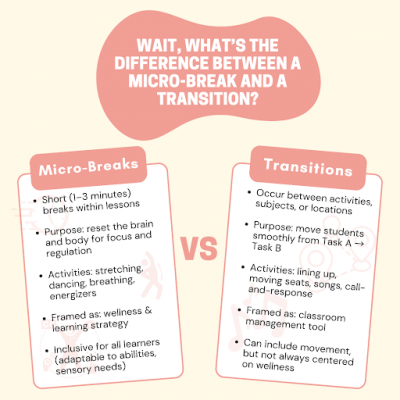
Kids aren’t built to sit still for long. Short, intentional movement breaks, sometimes called “micro-breaks” or more familiarly, brain breaks, help students reset their brains and bodies so they can focus better, regulate emotions, and stay engaged. For students in high-need settings or with diverse learning needs, these breaks aren’t just nice to have, they’re essential for equity, accessibility, and success.

What Makes a Good Micro-Break?

  • Quick: 1–3 minutes, no prep or equipment needed.
  • Inclusive: Adaptable for all bodies and energy levels.
  • Brain-boosting: Stimulates blood flow and oxygen to the brain.
  • Fun: Builds joy and connection, not just compliance.

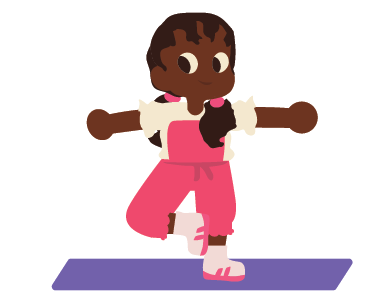
Poppy (a young girl) doing yoga on a purple mat.

5 Movement Moments for Any Classroom

1. Shake-Off & Reset

    • Have students stand, stretch their arms high, and shake their hands, arms, and legs for 30 seconds.
    • Why it works: Releases tension and helps regulate energy after long seated work.
    • Accessibility tip: Students can shake just their hands, fingers, or head if seated.

2. Follow the Leader Moves

    • Choose a student leader to guide 4–5 quick moves (jumps, stretches, spins). Rotate leaders so everyone has a turn.
    • Why it works: Builds executive functioning (sequencing, attention) and social connection.
    • Equity tip: Invite leaders to bring in a move from their culture or family tradition (e.g., a dance step).

3. Chair Stretch Break

    • While seated, guide students through simple stretches: reach to the ceiling, touch toes, twist side to side, roll shoulders.
    • Why it works: Perfect for tight spaces or classrooms without room to stand.
    • Accessibility tip: Offers options for students with mobility differences.

4. Brain Boost Challenge

    • Quick 1-minute challenge like:
      • 10 jumping jacks
      • 5 “cross crawls” (touch opposite knee and elbow)
      • Silent “statue pose” hold for 20 seconds
    • Why it works: Integrates body and brain, builds focus.
    • Adaptation: Swap jumping jacks for seated marches.

5. Dance It Out

    • Play 1 minute of upbeat, student-selected music. Let kids move freely in their space.
    • Why it works: Releases stress, sparks joy, and affirms identity.
    • Cultural connection: Rotate music from different cultures represented in the class.

Final Thoughts

Micro-breaks may only take a minute, but they build a classroom culture where health, belonging, and joy matter as much as academics. When every student has a chance to move in ways that feel good, we empower their brains and bodies to do their best learning.


Rethinking Classroom Celebrations

Healthy, Inclusive Snacks That Celebrate Culture & Community

Let’s be real: classroom celebrations matter. They’re joyful, memory-making moments that build connection, belonging, and student pride. But they’re also a chance to model community celebration and care, especially when it comes to food.

Too often, party snacks default to high-sugar, low-nutrition items that not all students can eat or enjoy. This can unintentionally leave some kids out due to a number of factors: allergies, cultural practices, health conditions, or family food norms.

Rethinking snack time doesn’t mean cutting fun. It means shifting the focus from treats to traditions and using food to celebrate identity, equity, and health.

A circular collection of watermelon slices being held by popsicle sticks lay on a table.

Why Healthy, Culturally Relevant Snacks Matter:

  • They support physical and emotional regulation during the school day.
  • They help reduce food-related exclusion, discomfort, and stigma.
  • They build student agency by honoring traditions and stories tied to food.
  • They promote curiosity, compassion, and cross-cultural learning.
  • They model healthy habits students can bring home to their families.

When snack choices are inclusive and thoughtful, every child can participate fully and joyfully.

Smart & Inclusive Snack Swaps for Class Celebrations:

Instead of defaulting to sugary cupcakes or candy, try one of these healthy alternatives:

Fruit-Forward Favorites

Fruit skewers made of pears, strawberries, bananas, and pineapple served with a side dip of homemade strawberry yogurt

Icon of 5 Ingredients or Less recipes Icon of Heart Healthy recipes Icon of Kid Friendly recipes Icon of Quick N Easy recipes Icon of Vegetarian recipes

Fruit Kabobs with Strawberry Dip

A bowl of sweet, crispy thinly sliced apple chips.

Icon of 5 Ingredients or Less recipes Icon of Heart Healthy recipes Icon of Kid Friendly recipes Icon of No Sugar Added recipes Icon of Vegetarian recipes

Baked Apple Chips

Frozen Yogurt Cups

Icon of 5 Ingredients or Less recipes Icon of Heart Healthy recipes Icon of Kid Friendly recipes Icon of Vegetarian recipes

Frozen Yogurt Cups


Savory Bites

Bowl of hummus with sliced cucumbers and pita bread on the side

Icon of Heart Healthy recipes Icon of No Sugar Added recipes Icon of Quick N Easy recipes Icon of Vegetarian recipes

Fiesta Hummus

Small bowl of black, great northern, and red kidney beans, mixed with diced tomatoes and topped with grated parmesan cheese.

Icon of Heart Healthy recipes Icon of Kid Friendly recipes Icon of No Sugar Added recipes Icon of Quick N Easy recipes Icon of Vegetarian recipes

Cheesy Bean Dip

Bowl popcorn with seasonings.

Icon of 5 Ingredients or Less recipes Icon of Heart Healthy recipes Icon of Kid Friendly recipes Icon of No Sugar Added recipes Icon of Quick N Easy recipes Icon of Vegetarian recipes

Stovetop Popcorn


Global-Inspired Treats (Check with families!)

Multiple of images of japanese onigiri with different fillings.

Japanese Onigiri

(rice balls with veggies or seaweed)
Image of Middle Eastern date balls with oats and cinnamon on a white plate.

Middle Eastern Date Balls

(with oats and cinnamon)
Image of baked plantain chips set on a bowl and over rack next to a dip.

Baked Plantain Chips

Image of multiple paletas (popsicles) laying over a table with strawberries, pineapple pieces, and a lemon around it.
Mexican Paletas
(fruit-based popsicles)
Filipino Turon (baked banana rolls) on a white plate near bananas and a sauce.
Filipino Turon
(baked banana rolls)
Somali Sambusas (baked, veggie-filled triangles) on a plate.
Somali Sambusas
(baked, veggie-filled triangles)

Hydration Helpers

Ice tray filled with watermelon flavored water.

Icon of 5 Ingredients or Less recipes Icon of Heart Healthy recipes Icon of Kid Friendly recipes Icon of Quick N Easy recipes Icon of No Sugar Added recipes Icon of Vegetarian recipes

Fruit Ice Cubes

Image of ice tea in a glass and cup with a lemon slice sitting over a table.

Caffeine-Free Iced Tea

Mason jar filled with mint and cucumber infused water

Icon of 5 Ingredients or Less recipes Icon of Heart Healthy recipes Icon of Kid Friendly recipes Icon of Quick N Easy recipes Icon of No Sugar Added recipes Icon of Vegetarian recipes

Cucumber Mint Water


Visual idea:

Turn this into a “Snack Around the World” bulletin board or activity where students share a favorite healthy snack from home or their heritage.

Making Celebrations More Culturally Responsive:

  1. Invite families to share recipes or food stories from home.
  2. Create a classroom snack “passport” and celebrate different countries or cultures monthly.
  3. Check that snacks meet dietary needs (gluten-free, halal, kosher, dairy-free, etc.) and avoid allergens.
  4. Use visuals and labels with names of snacks in English and students’ home languages.
  5. Emphasize food as a connection to community, not just reward or consumption.
    Reminder
    Some students may come from food-insecure homes. Creating a shared snack table or making snacks together at school can build equity and reduce pressure on families to “bring something.”

    Teacher Tip: Set Guidelines Ahead of Time

    • Send a short letter or email to families explaining your celebration goals: joy, health, and inclusion (a letter template in English and Spanish is linked below!).
    • Offer a short list of suggested snacks that reflect student identities and nutritional guidelines.
    • Encourage families to bring in non-food celebration items too (stickers, pencils, books, games, music).

    Celebrations can feed more than just bellies, they can nourish identity, pride, and classroom community. When we reimagine snack time with health and culture in mind, we send the message: “You belong here. All of you.”

    Below are templates, both in Spanish and English, of letters for the families for your classroom celebration!

      English Version

      Family Letter Template

      Spanish Version

      Carta Para Familias

      Loader Loading...
      EAD Logo Taking too long?

      Reload Reload document
      | Open Open in new tab

      Loader Loading...
      EAD Logo Taking too long?

      Reload Reload document
      | Open Open in new tab

      Executive Functioning & Food: How Planning Meals Builds Brain Power

      Planning meals is often linked to healthier eating habits—but let’s be honest, sticking to a plan isn’t always easy. That’s because successful planning relies on a set of brain-based skills called executive functioning. These are the mental tools we use to stay focused, stay organized, and make thoughtful decisions.

      Executive functioning is especially important for students in elementary and middle school, when brains are still growing and learning how to manage impulses, plan ahead, and adapt to change. Supporting executive functioning is especially crucial in high-need communities, where external stressors can impact a child’s ability to self-regulate. Fortunately, something as everyday as meal planning can help.

      A teacher discussing with a student on setting up a meal plan.

      What Is Executive Functioning?

      Executive functioning is like the brain’s management system. It includes a set of skills to help with planning and organizing, decision-making, self-regulation, flexibility, and much more.

      These skills are not just academic—they support emotional regulation, social skills, and long-term success.

      How Meal Planning Builds Brain Power

      Meal and snack planning is a concrete, culturally relevant way to practice executive functioning. 

      When students plan meals, they practice:

      • Planning: Following steps (choosing ingredients, prepping, packing, and eating)
      • Self-monitoring: reflecting on how different foods make them feel
      • Task initiation: starting to prepare meals
      • Flexibility: finding alternatives when choices are limited

      Image describing the 8 executive functions: including self control, self monitor, emotional control, flexibility, task initiation, organization, working memory, and planning & time management.

      Making It Culturally Responsive

      • Encourage students to plan snacks or meals using foods from their home culture
      • Validate all foods; avoid labeling “good” or “bad”
      • Celebrate diversity by sharing recipes or snack ideas from families
      • Address food access with compassion; include school meal options or pantry resources. Check out 211 and their list of food pantries in Connecticut.

       Classroom Activity: “Plan Your Power Snack”

      1. Provide a simple snack planning worksheet (with icons for younger students).
      2. Ask: “What’s one snack that helps your brain focus?”
      3. Have students map out when they’ll eat it and how it makes them feel.
      4. Create a class “Brain Power Menu” with ideas from all cultures.

      Optional: Send home a short activity to put one snack together during the week. Talk about why it was chosen and how it makes you feel. Include a note inviting families to share favorite recipes or snack traditions.


      Here is a Lesson Plan and Worksheet

      Closeup of a girl in school, focused, working on an activity in class.

      Final Thoughts

      Meal planning may seem like a small task, but it’s actually powerful brain work. By helping students make thoughtful food choices—whether in class, at home, or in the cafeteria—we’re helping them build executive functioning skills that will serve them for life.

      It’s not just about food. It’s about focus, confidence, and the skills that help kids thrive.


      When Too Much Good Is a Bad Thing

      A Little Bit Goes a Long Way 

      The saying, "You are what you eat" is sort of true when it comes to your health. But the part we should add is, "You are how much you eat." Balance is the name of the game.

      While nutritious foods are important to keep you healthy, too much of a good thing isn't always best. Below are some examples of foods that are good for you, but only in small amounts. 


      Nuts 

      A few nuts each day is a great source of protein and healthy fats, but you know what's not healthy? A cup of nuts. Or an entire container of nuts... Hey, it happens. A little bit goes a long way though. About 1/4 cup is all you need. Get your (small) dose of nuts in this apple salad or energy trail mix. 


      walnuts

      Juice

      Did you know more than 1/2 a cup of juice (4 oz), especially for kids, isn't a good idea? It’s much better to eat fruit instead. A half cup of juice daily is okay but otherwise choose fruit for more fiber and fewer calories. Check it out: 

      1 cup 100% apple juice 1 medium apple
      114 calories 95 calories
      1 g fiber 4 g fiber 
      24 g sugar 19 g sugar 

      Healthy Oils

      You may already know that olive oil and canola oil are better choices than “solid” fats like lard, shortening, or butter. It does not mean we are able to have large amounts of them though. More unsaturated fats and less saturated/trans fats make olive and canola oil better options for cooking and baking but try to use a couple of tablespoons or less daily. 


      olive oil

      Has all this food talk left you hungry? Here are a few great recipes to fill you up with nutrition and deliciousness:

      Bowl of mixed rice with beans, celery, bell peppers, garlic, and onion

      Icon of 5 Ingredients or Less recipes Icon of Heart Healthy recipes Icon of Kid Friendly recipesIcon of No Sugar Added recipes Icon of Vegetarian recipes

      Crock Pot Red Beans and Rice

      Plate of penne pasta mixed with cannellini beans, chopped fresh basil leaves and chopped tomatoes.

      Icon of Kid Friendly recipes Icon of No Sugar Added recipes Icon of Quick N Easy recipes Icon of Vegetarian recipes

      Tuscan Style Pasta with White Beans

      Bowl of boiled chickpeas mixed with onions, diced tomatoes, chopped spinach, and golden raisins.

      Icon of Heart Healthy recipes Icon of No Sugar Added recipes Icon of Quick N Easy recipes Icon of Vegetarian recipes

      Spanish Chickpea Stew