Archives

Movement Moments: 5 Ways to Add Micro-Breaks Into the Classroom

Why Micro-Breaks Matter

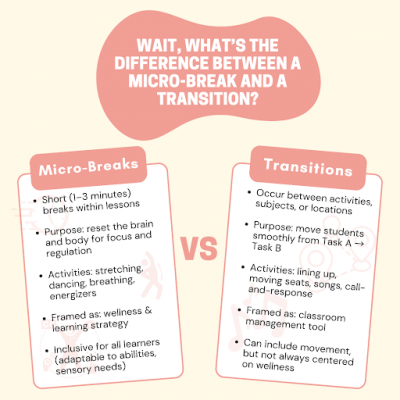
Kids aren’t built to sit still for long. Short, intentional movement breaks, sometimes called “micro-breaks” or more familiarly, brain breaks, help students reset their brains and bodies so they can focus better, regulate emotions, and stay engaged. For students in high-need settings or with diverse learning needs, these breaks aren’t just nice to have, they’re essential for equity, accessibility, and success.

What Makes a Good Micro-Break?

  • Quick: 1–3 minutes, no prep or equipment needed.
  • Inclusive: Adaptable for all bodies and energy levels.
  • Brain-boosting: Stimulates blood flow and oxygen to the brain.
  • Fun: Builds joy and connection, not just compliance.

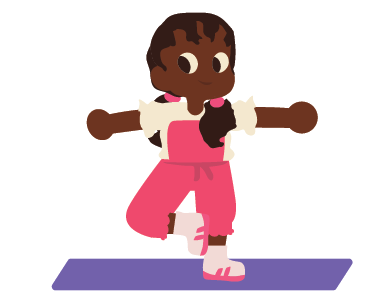
Poppy (a young girl) doing yoga on a purple mat.

5 Movement Moments for Any Classroom

1. Shake-Off & Reset

    • Have students stand, stretch their arms high, and shake their hands, arms, and legs for 30 seconds.
    • Why it works: Releases tension and helps regulate energy after long seated work.
    • Accessibility tip: Students can shake just their hands, fingers, or head if seated.

2. Follow the Leader Moves

    • Choose a student leader to guide 4–5 quick moves (jumps, stretches, spins). Rotate leaders so everyone has a turn.
    • Why it works: Builds executive functioning (sequencing, attention) and social connection.
    • Equity tip: Invite leaders to bring in a move from their culture or family tradition (e.g., a dance step).

3. Chair Stretch Break

    • While seated, guide students through simple stretches: reach to the ceiling, touch toes, twist side to side, roll shoulders.
    • Why it works: Perfect for tight spaces or classrooms without room to stand.
    • Accessibility tip: Offers options for students with mobility differences.

4. Brain Boost Challenge

    • Quick 1-minute challenge like:
      • 10 jumping jacks
      • 5 “cross crawls” (touch opposite knee and elbow)
      • Silent “statue pose” hold for 20 seconds
    • Why it works: Integrates body and brain, builds focus.
    • Adaptation: Swap jumping jacks for seated marches.

5. Dance It Out

    • Play 1 minute of upbeat, student-selected music. Let kids move freely in their space.
    • Why it works: Releases stress, sparks joy, and affirms identity.
    • Cultural connection: Rotate music from different cultures represented in the class.

Final Thoughts

Micro-breaks may only take a minute, but they build a classroom culture where health, belonging, and joy matter as much as academics. When every student has a chance to move in ways that feel good, we empower their brains and bodies to do their best learning.


Executive Functioning & Food: How Planning Meals Builds Brain Power

Planning meals is often linked to healthier eating habits—but let’s be honest, sticking to a plan isn’t always easy. That’s because successful planning relies on a set of brain-based skills called executive functioning. These are the mental tools we use to stay focused, stay organized, and make thoughtful decisions.

Executive functioning is especially important for students in elementary and middle school, when brains are still growing and learning how to manage impulses, plan ahead, and adapt to change. Supporting executive functioning is especially crucial in high-need communities, where external stressors can impact a child’s ability to self-regulate. Fortunately, something as everyday as meal planning can help.

A teacher discussing with a student on setting up a meal plan.

What Is Executive Functioning?

Executive functioning is like the brain’s management system. It includes a set of skills to help with planning and organizing, decision-making, self-regulation, flexibility, and much more.

These skills are not just academic—they support emotional regulation, social skills, and long-term success.

How Meal Planning Builds Brain Power

Meal and snack planning is a concrete, culturally relevant way to practice executive functioning. 

When students plan meals, they practice:

  • Planning: Following steps (choosing ingredients, prepping, packing, and eating)
  • Self-monitoring: reflecting on how different foods make them feel
  • Task initiation: starting to prepare meals
  • Flexibility: finding alternatives when choices are limited

Image describing the 8 executive functions: including self control, self monitor, emotional control, flexibility, task initiation, organization, working memory, and planning & time management.

Making It Culturally Responsive

  • Encourage students to plan snacks or meals using foods from their home culture
  • Validate all foods; avoid labeling “good” or “bad”
  • Celebrate diversity by sharing recipes or snack ideas from families
  • Address food access with compassion; include school meal options or pantry resources. Check out 211 and their list of food pantries in Connecticut.

 Classroom Activity: “Plan Your Power Snack”

  1. Provide a simple snack planning worksheet (with icons for younger students).
  2. Ask: “What’s one snack that helps your brain focus?”
  3. Have students map out when they’ll eat it and how it makes them feel.
  4. Create a class “Brain Power Menu” with ideas from all cultures.

Optional: Send home a short activity to put one snack together during the week. Talk about why it was chosen and how it makes you feel. Include a note inviting families to share favorite recipes or snack traditions.


Here is a Lesson Plan and Worksheet

Closeup of a girl in school, focused, working on an activity in class.

Final Thoughts

Meal planning may seem like a small task, but it’s actually powerful brain work. By helping students make thoughtful food choices—whether in class, at home, or in the cafeteria—we’re helping them build executive functioning skills that will serve them for life.

It’s not just about food. It’s about focus, confidence, and the skills that help kids thrive.


Why Whole Grains Will Change Your Life

What Are Whole Grains? 

WHOLE GRAINS REFINED GRAINS
Whole Grains are food made from wheat, rice, oats, cornmeal, barley or cereal grain, that contain the entire grain kernel.   Refined Grains are food made from wheat, rice, oats, cornmeal, barley or cereal grain, that have been milled, a process that removes parts of the grain. 

When grains are refined they lose beneficial nutrients like dietary fiber, iron, and many B vitamins.

Most refined grains are enriched, meaning some vitamins are added back in. 
Dietary fiber does not usually get added back.  

Dietary fiber from whole grains can.... 

  • Help reduce blood cholesterol levels 
  • Lower risk of heart disease, obesity, and type 2 diabetes 
  • Help proper bowel function 
  • Reduce constipation and diverticulitis 
  • Help regulate blood sugar levels 

Fiber packed foods make you feel of fuller longer.

Shopping For Whole Grains 

  • Use the nutrition facts label, and choose whole-grain products with a higher % Daily Value for fiber (%DV) 
  • Choose foods that name whole-grain ingredients first on the ingredient list 
  • If you see the words "multi-grain," "stone-ground," "100% wheat," "cracked wheat," "seven-grain," or "bran" they are usually not whole-grain products! 
  • Brown does not mean it is a whole grain . Some brown breads have molasses or other coloring in them to look like whole wheat.  Read the ingredient list to see if it is a whole grain.   

Whole grains: 

  • Brown rice
  • Buckwheat
  • Millet
  • Oatmeal
  • Quinoa
  • Rolled Oats
  • Whole-grain/ hulled barley
  • Whole-grain corn
  • Whole Oats
  • Whole Rye
  • Whole wheat
  • Farro
  • Kamut


Making The Switch to Whole Grains

You should try to replace refined grains with whole grains when possible:

  • Whole grain bread instead of white bread
  • Brown rice instead of white rice
  • Whole grain pasta instead of plain pasta 

If you don't like it at first, try a half & half mix:

  • Half brown rice, half white rice
  • Half whole grain pasta, half plain pasta
Did you know?
At least half of all the grains you eat should be whole grains. 

Quick Tip:

You can use rolled oats or a crushed, unsweetened whole grain cereal as breading for baked chicken or fish! 


Try These Whole Grain Recipes

Bowl of whole wheat spaghetti mixed with peas and turkey bacon covered in shredded parmesan cheese.

Icon of Kid Friendly recipes Icon of No Sugar Added recipes Icon of Quick N Easy recipes

Simple Italian Pasta

Plate of pancakes cooked with yogurt, topped with strawberry yogurt and sliced strawberries.

Icon of Heart Healthy recipes Icon of Kid Friendly recipes Icon of Vegetarian recipes

Whole Grain Strawberry Pancakes

Peanut butter oatmeal topped with banana slices in a bowl sitting on a wooden table.

Icon of 5 Ingredients or Less recipes Icon of Heart Healthy recipes Icon of Kid Friendly recipes Icon of No Sugar Added recipes Icon of Quick N Easy recipes Icon of Vegetarian recipes

Peanut Butter Banana Oatmeal

Bowl of Spanish rice mixed with chopped green and red peppers.

Icon of Heart Healthy recipes Icon of Kid Friendly recipes Icon of No Sugar Added recipes Icon of Quick N Easy recipes Icon of Vegetarian recipes

Spanish Rice

Quinoa and mixed vegetable stir-fry in a white bowl on a wooden cutting board.

Icon of Kid Friendly recipes Icon of No Sugar Added recipes Icon of Quick N Easy recipes Icon of Vegetarian recipes

Healthy Vegetable Fried Quinoa

colorful farro salad

Icon of Heart Healthy recipes Icon of No Sugar Added recipes Icon of Quick N Easy recipes Icon of Vegetarian recipes

Colorful Farro Salad

Wait! Don’t throw that out!

Let's talk about those sad, bruised little apples on your counter. Or those wilting greens in your fridge. Don't throw them out! You may have fruits, veggies, and herbs that are going downhill quickly, but we have some great ways to save them (which means saving $$$)! 

Apples 

You got a little too excited about that 10 pound discounted bag of apples, and now you're stuck with 9 pounds of leftover apples that are looking a pretty shabby. You know where bruised apples don't matter? In applesauce! Try this simple recipe. 


A bowl of applesauce with a dash of cinnamon.

Roasted carrots cut into long slices spread on a cookie sheet.

Carrots  

When carrots start feeling a little bendy, you may think it's time to toss them. With a little chop chop, olive oil, and heat, they can still be the perfect side dish. Follow this quick and easy recipe for roasted carrots. 


Root Vegetables 

Roasting can save more lives than just carrots. Beets looking a little worse for wear? Getting some "eyes" or little sprouts on your potatoes? These root vegetables have tons of flavor after a good roast. Try our Roasted Root Vegetables recipe on for size. 


Glass container filled with colorful, roasted root vegetables on a wooden table.

Bowl of basil pesto with a sprig of basil.

Greens 

Any wilted greens work for this. Add a handful of basil to them, and whip up this recipe for Veggie Top Pesto. Use it to top roasted vegetables, baked chicken, or spread it on a sandwich. 


Bananas 

Sure, you could make banana bread with those too-brown bananas. But they become similar to ice cream when frozen and blended (Umm... yes, please!). When bananas are nice and brown, pop them in the freezer instead of throwing them out. Then they'll be ready at a moment's notice for a treat, like this Peanut Butter Banana Smoothie. 


Glass holding a peanut butter banana smoothie with a red straw on a kitchen counter and mosaic backsplash.

When Too Much Good Is a Bad Thing

A Little Bit Goes a Long Way 

The saying, "You are what you eat" is sort of true when it comes to your health. But the part we should add is, "You are how much you eat." Balance is the name of the game.

While nutritious foods are important to keep you healthy, too much of a good thing isn't always best. Below are some examples of foods that are good for you, but only in small amounts. 


Nuts 

A few nuts each day is a great source of protein and healthy fats, but you know what's not healthy? A cup of nuts. Or an entire container of nuts... Hey, it happens. A little bit goes a long way though. About 1/4 cup is all you need. Get your (small) dose of nuts in this apple salad or energy trail mix. 


walnuts

Juice

Did you know more than 1/2 a cup of juice (4 oz), especially for kids, isn't a good idea? It’s much better to eat fruit instead. A half cup of juice daily is okay but otherwise choose fruit for more fiber and fewer calories. Check it out: 

1 cup 100% apple juice 1 medium apple
114 calories 95 calories
1 g fiber 4 g fiber 
24 g sugar 19 g sugar 

Healthy Oils

You may already know that olive oil and canola oil are better choices than “solid” fats like lard, shortening, or butter. It does not mean we are able to have large amounts of them though. More unsaturated fats and less saturated/trans fats make olive and canola oil better options for cooking and baking but try to use a couple of tablespoons or less daily. 


olive oil

Has all this food talk left you hungry? Here are a few great recipes to fill you up with nutrition and deliciousness:

Bowl of mixed rice with beans, celery, bell peppers, garlic, and onion

Icon of 5 Ingredients or Less recipes Icon of Heart Healthy recipes Icon of Kid Friendly recipesIcon of No Sugar Added recipes Icon of Vegetarian recipes

Crock Pot Red Beans and Rice

Plate of penne pasta mixed with cannellini beans, chopped fresh basil leaves and chopped tomatoes.

Icon of Kid Friendly recipes Icon of No Sugar Added recipes Icon of Quick N Easy recipes Icon of Vegetarian recipes

Tuscan Style Pasta with White Beans

Bowl of boiled chickpeas mixed with onions, diced tomatoes, chopped spinach, and golden raisins.

Icon of Heart Healthy recipes Icon of No Sugar Added recipes Icon of Quick N Easy recipes Icon of Vegetarian recipes

Spanish Chickpea Stew

Enjoying Vegetables the Easy Way

Vegetables are some of the healthiest foods available. Yet, many of us have trouble eating the minimum recommended 3 servings (2 ½ cups) daily. Fresh veggies can be expensive, especially if you are buying them out of season. And sometimes they go bad before you can eat them.

Luckily, there’s an easy solution! Canned and frozen vegetables are inexpensive, always in season, and last a long time. Give them a try in our easy recipes. You will love them!


Canned & Frozen Vegetables – Just as Good as Fresh! 

Before we go any further, let’s get something straight – canned and frozen vegetables are just as good as fresh varieties. You may have heard the saying, “fresh is best.” That’s not really true! Canned and frozen vegetables are picked at their peak of ripeness and then preserved to keep their nutrients. Canned and frozen veggies are already chopped and ready to eat, making them very convenient.  


Healthy Tips for Using Canned & Frozen Vegetables 

Since canned and frozen vegetables are processed and packaged,  follow these tips to make the healthiest choices: 

  • Look for reduced or no sodium (salt) canned vegetables, or rinse canned veggies to remove some of the sodium (salt). 
  • Buy plain frozen vegetables without sauces. They are cheaper and better for using in recipes. 
  • Always read the ingredient list to be sure you are getting getting just vegetables without anything else added to them


How to Use Canned or Frozen Vegetables 

Cooking with canned or frozen vegetables is very easy. Generally, canned veggies work best in casseroles or soups because they are a little softer in consistency. Frozen vegetables can taste great all by themselves heated up as a side dish. The following suggestions are popular, flavorful choices.  


6 Canned Vegetables You Will Love 

  • Tomatoes – Canned tomatoes are excellent for making a hearty pasta sauce or as a base for soup.
  • Mushrooms – Use canned or frozen mushrooms as a simple pizza topping or chop them finely and add them to meat.
  • Mixed Vegetables – The classic mix of vegetables (carrots, peas, and corn) is perfect as a base for soup or pot pie. Try them in  Beef & Vegetable Soup.     
  • Pumpkin – Buying an entire pumpkin is expensive and cooking it can be lots of work. Canned pumpkin gives you all the nutrients with none of the work. Add canned pumpkin to vanilla pudding or to a smoothie to give it more fiber and a creamy consistency. You can even use it to make a Peanut Butter, Banana & Pumpkin Sandwich.  
  • Corn – Kids love canned corn! It is naturally sweet and also makes a great addition to casseroles or dishes like this Southwest Salad. 
  • OIives – Low sodium black olives make a tasty, filling snack. They also add flavor to salads, casserole, and pizza, plus provide healthy fats.
Plate of pizza slices covered in tomatoes, red and green peppers, and onion.
Icon of 5 Ingredients or Less recipes Icon of Kid Friendly recipes Icon of Quick N Easy recipes Icon of Vegetarian recipes Veggie Pizza Pita Pockets
Beef, beans, corn, and other mixed vegetable soup in a small ceramic bowl.
Icon of 5 Ingredients or Less recipes Icon of Heart Healthy recipes Icon of Kid Friendly recipes Icon of No Sugar Added recipes Icon of Quick N Easy recipes Beef and Vegetable Soup
Sandwich with two whole wheat slices of bread filled with bananas creamy pumpkin, and peanut butter.
Icon of 5 Ingredients or Less recipes Icon of Kid Friendly recipes Icon of Quick N Easy recipes Icon of Vegetarian recipes Peanut Butter Banana and Pumpkin Sandwich


5 Frozen Vegetable Favorites 

  • Peppers or Onions – No one likes chopping onions! A bag of frozen onions can save you a lot of tears. Onions and peppers are flavorful additions to stir fries, casseroles, or omelets; as a topping for pizza; or in a simple quesadilla. Frozen peppers work great in Crock Pot Steak and Peppers.   
  • Frozen Peas – Peas can perk up virtually any dish. Add them to casseroles or macaroni and cheese, or serve them with baked chicken or fish. Try peas in this easy Turkey Tetrazzini.  
  • Chopped Broccoli – Raw broccoli may taste bitter to some people and it can be difficult to prepare. Frozen, chopped broccoli has a milder flavor and takes no prep time. Sautee frozen broccoli with a little garlic and serve it as a healthy side dish, or add the cooked broccoli to eggs for a Basic Vegetable Quiche. 
  • Spinach – If you are trying to get more greens into your diet, frozen spinach is an excellent choice. Toss it into your morning smoothie and you won’t even know it’s there. Give it a try in our Mango Green Smoothie. 
  • Riced Cauliflower – Cauliflower chopped into rice-shaped pieces is super popular. You can use it as a replacement for starches like pasta or rice, or you can eat it on its own as a tasty side dish. If you cook it and then puree it with a little garlic, it tastes like creamy mashed potatoes! 
Slow cooked beef, tomatoes and peppers in a pan

Icon of Kid Friendly recipes Icon of No Sugar Added recipes Icon of Quick N Easy recipes

Crock Pot Steak and Peppers

Broccoli and other vegetables quiche baked in a ceramic bowl.

Icon of Kid Friendly recipes Icon of Vegetarian recipes

Basic Vegetable Quiche

Mango green smoothie in class cup on patterned table cloth surrounded by a mango, oranges, banana, and plate of spinach.

Icon of 5 Ingredients or Less recipes Icon of Heart Healthy recipes Icon of Kid Friendly recipes Icon of No Sugar Added recipes Icon of Quick N Easy recipes Icon of Vegetarian recipes

Mango Green Smoothie


14 Tips for Using Canned and Frozen Fruits

We LOVE fruits! They taste sweet, make healthy desserts and snacks, and they are loaded with nutrients. However, like fresh vegetables, fresh fruits can be expensive when they aren’t in season and they can spoil quickly. Canned and frozen fruits can be cheaper, more convenient options. Here’s how to make the most of them in your desserts and snacks.


Healthy Ways to Use Canned or Frozen Fruit 

Fruits contain natural sugars and are already sweet enough on their own. Read the Nutrition Facts label when buying packaged fruits so you are sure there is no added sugar or syrup. See the Nutrition Facts label below for an example of where to check for added sugars. 

Look at the line ”Includes X g Added Sugars” to see how many grams of sugar have been added in. This label indicates there is no added sugar. 


Total Fat 0g 12%
Saturated Fat 4.5g 23%
Trans Fat 0g
Cholesterol 35mg 12%
Sodium 850mg 37%
Total Carbohydrate 34g 12%
Dietary Fiber 4g 14%
Total Sugars 6g
Included 0g Added Sugars 0%
Protein 15g
Vitamin D 0mcg 0%
Calcium 320mg 25%
Iron 1.6mg 8%
Potassium 510mg 10%


Here are additional tips when buying canned and frozen fruits: 

  • Buy canned or jarred fruits packed in 100% juice or water. The label will often say, “no sugar added.” 
  • If you buy canned fruit in syrup, rinse and drain the fruit to remove excess sugar. 
  • Instead of buying individual fruit cups, buy a jar of fruit or natural applesauce and make your own snack-packs with reusable plastic containers.  
  • Thaw frozen fruits in the refrigerator overnight and then drain using a colander over a large bowl.  


Save the juice for sweetening seltzer or for making fruit ice cubes. 


6 Classic Canned & Jarred Fruits 

There are canned and jarred fruits that always taste great. The following options are available in most grocery stores. These fruits are all delicious on their own or when used as a topping for plain yogurt, cottage cheese, whole grain pancakes, or oatmeal.
  

  • Unsweetened or No Sugar Added Apple Sauce
  • Peaches
  • Mandarin Oranges
  • Mixed Fruit
  • Pineapple
  • Pears


Feeling Fancy? Spiced Pears make an easy, decadent dessert


4 Fabulous, Frozen Fruit Finds 

Pineapple – Frozen pineapple chunks are naturally sweet and turn any smoothie into a tropical treat. Plus, they are much easier than cutting a prickly pineapple – Ouch! Use frozen or canned pineapple to make kid-friendly Pineapple Orange Popsicles.

 Mixed Melon or Fruit Salad – Frozen melon balls or frozen fruit salad make the perfect light dessert. Just thaw and serve or try in our Melon Salsa.

Bananas – Overripe bananas are often cheaper in the “damaged fruit” section of the grocery store. Stock up and freeze ripe bananas in a freezer bag to have them available for a quick Peanut Butter Banana Smoothie.

Mango – Frozen mango chunks blend beautifully into a Mango Green Smoothie. 


4 Easy Treats to Make with Frozen Berries 

Berries can be expensive when they aren’t in season. Frozen berries are always available and typically cost less. Use frozen or thawed berries in the following treats:

Two glasses of banana pineapple strawberry smoothie with a strawberry on the rim of the glass.

Two glasses of banana pineapple strawberry smoothie with a strawberry on the rim of the glass. Icon of Heart Healthy recipes Icon of Kid Friendly recipes Icon of No Sugar Added recipes Icon of Quick N Easy recipes Icon of Vegetarian recipes

Banana Pineapple Strawberry Smoothie

Sliced of moist blueberry coffee cake.

Icon of Kid Friendly recipes Icon of Vegetarian recipes

Blueberry Coffee Cake

Frozen yogurt cups made with strawberries and blueberries

Icon of 5 Ingredients or Less recipes Icon of Heart Healthy recipes Icon of Kid Friendly recipes Icon of Vegetarian recipes

Frozen Yogurt Cups

Bowl of oatmeal topped with blueberries, raspberries, and walnuts.

Icon of 5 Ingredients or Less recipes Icon of Heart Healthy recipes Icon of Kid Friendly recipes Icon of No Sugar Added recipes Icon of Quick N Easy recipes Icon of Vegetarian recipes

Berry Oatmeal


BONUS TIP! If your fresh fruits are starting to go bad, freeze them! Freezing fruits like brown bananas or ripe berries will keep them from ripening any further. You can put them to delicious use with the tips you just learned. 


For even more information, explore the Fruit Group from MyPlate.gov. 
For more information on reading labels, check out How to Understand and Use the Nutrition Facts Label from the FDA. 


Helpful Tips For Green Leafy Vegetables

Green leafy vegetables have key nutrients such as Vitamin A, Vitamin C, Calcium, Potassium and Fiber. Try these tips for buying, storing, and cooking green leafy vegetables.

Choose the Freshest Greens

  • Look for moist, crisp greens with rich color.
  • Avoid those that are yellowish or brownish or have slimy leaves.
  • Greens can go bad quickly!  So only buy what you can use in a short amount of time.
Quick Tip
If the leaves appear wilted, you can cut them into pieces and place them in a large bowl of water for about an hour. They will often plump up and be fine to eat.

Storing Greens

  • Wrap washed greens in a paper towel and place in a plastic bag. Keep in the coldest part of the refrigerator.
  • Plan to eat greens within 1-4 days after you buy them.

Washing Greens

  • Remove leaves from thick stems and place in large bowl of cold water. Swish them around then remove leaves (do not drain using a strainer because you will mix the dirt back in) and discard water.
  • Repeat until no more dirt appears in the bowl. Pat with towel or paper tower.

Freezing Greens

  • Greens like spinach, Swiss chard, and kale can be frozen, but you must blanch them first and place in a zip-top freezer bag or other airtight container.
*Blanching means to place foods in boiling water for a short amount of time (a few seconds to 1 minute depending on the vegetable)

Make Kale Tender and Less Bitter

Kale can taste bitter. By massaging kale leaves with citrus juice and olive oil, you can make a kale side dish with a tangy kick. Just follow these three steps:

  1. Add 1 tsp of lemon or lime juice
  2.  Add 1 tsp olive oil
  3.  Massage ingredients into leaves with your hands

Cooking Greens

  • Greens can be added to soups and stews, eaten raw in salads or juiced with other greens and vegetables.
  • You can cook greens by steaming, boiling, or microwaving.
Quick Tip
When microwaving, cook for 2 minutes for every 2 cups of greens. Make sure to use a microwave safe bowl and cover the greens with a damp paper towel.


13 Homemade Snacks That Beat Anything Bought In A Bag

Did you know you can create many of your favorite snacks at home?

Homemade snacks are often healthier and cheaper than buying packaged snacks. Plus, they are a lot easier than you would think. We'll get you started with 13 of our favorite snack recipe ideas. 


1. Baked Apple Chips

Need something a little sweeter? Give these Baked Apple Chips a try! 

A bowl of sweet, crispy thinly sliced apple chips.

Icon of 5 Ingredients or Less recipes Icon of Heart Healthy recipes Icon of Kid Friendly recipes Icon of No Sugar Added recipes Icon of Vegetarian recipes

2. Kale Chips 

Kale Chips are an easy way to get the kids to eat vegetables!

Baked kale chips on a square, white plate resting on a green striped cloth napkin.

Icon of 5 Ingredients or Less recipes Icon of Heart Healthy recipes Icon of Kid Friendly recipes Icon of No Sugar Added recipes Icon of Quick N Easy recipes Icon of Vegetarian recipes

3. Granola Bars

Homemade Granola Bars? Yes please! 

Homemade granola bars made of honey, peanut butter, oats, raisins, carrots, and coconut.

Icon of Heart Healthy recipes Icon of Kid Friendly recipes Icon of Quick N Easy recipes Icon of Vegetarian recipes


4. Ants on a Log

Have the kids make these fun Ants on a Log on their own! 

Plate with "ants on a log" which are celery stalks filled with peanut butter topped with raisins.

Icon of 5 Ingredients or Less recipes Icon of Heart Healthy recipes Icon of Kid Friendly recipes Icon of Quick N Easy recipes Icon of Vegetarian recipes

5. Trail Mixes 

Make your own trail mix by blending your favorite nuts, seeds, dried fruit and cereal, or try our Energy Trail Mix or Sweet & Salty Trail Mix recipes. 

Trail mix made with dried apricots, dried cranberries, walnuts, pumpkin seeds, and sunflower seeds

Icon of Kid Friendly recipes Icon of Quick N Easy recipes Icon of Vegetarian recipes

 
Bowl of mixed sweet and salty diced mix trail with Chex cereal, cheerios, peanuts, pretzels, and raisins.

Icon of Kid Friendly recipes Icon of Quick N Easy recipes Icon of Vegetarian recipes


6. Vegetables and Hummus 

Fiesta Hummus is a great source of healthy protein so it will fill you up!  

Bowl of hummus with sliced cucumbers and pita bread on the side

Icon of Heart Healthy recipes Icon of No Sugar Added recipes Icon of Quick N Easy recipes Icon of Vegetarian recipes


8. Veggies or whole grain crackers with Guacamole 

Avocados are high in healthy fats, which makes guacamole a very satisfying dip.  

Guacamole garnished with leaves of cilantro in a bowl, on a plate with corn chips.

Icon of 5 Ingredients or Less recipes Icon of Heart Healthy recipes Icon of Kid Friendly recipes Icon of No Sugar Added recipesIcon of Quick N Easy recipes Icon of Vegetarian recipes

9. Fruit Salad

There is nothing better than fresh cut fruit. If you buy fruits in season they will be less expensive and taste twice as good! 

fruit salad

10. Veggie Pinwheels

Veggie Pinwheels are little, bite-sized wraps filled with flavor.

Flour tortillas rolled with tomato, spinach, and cream cheese, then cut into slices that look like pinwheels.

Icon of 5 Ingredients or Less recipes Icon of Heart Healthy recipes Icon of Kid Friendly recipes Icon of No Sugar Added recipesIcon of Quick N Easy recipes Icon of Vegetarian recipes

11. Fruit Pizza

Everyone loves pizza and fruit so why not put them together?

Rice cake topped with yogurt or cream cheese with strawberries and grapes on top.

Icon of 5 Ingredients or Less recipes Icon of Heart Healthy recipes Icon of Kid Friendly recipes Icon of Quick N Easy recipes Icon of Vegetarian recipes

12. Fruit and Yogurt Parfait 

You can use any type of fresh, frozen or canned fruit to make this Fruit & Yogurt Parfait your own!  

fruit-yogurt-parfait

Icon of 5 Ingredients or Less recipes Icon of Heart Healthy recipes Icon of Kid Friendly recipes Icon of Quick N Easy recipes Icon of Vegetarian recipes

13. Popcorn

Did you know popcorn is a whole grain? Making plain popcorn and flavoring it with your own spices is much healthier than buttered popcorn in a bag. Try Stove-Top Popcorn or Chili Popcorn. 

Bowl popcorn with seasonings.

Icon of 5 Ingredients or Less recipes Icon of Heart Healthy recipes Icon of Kid Friendly recipes Icon of No Sugar Added recipes Icon of Quick N Easy recipes Icon of Vegetarian recipes

Bowl of popcorn topped with margarine and chili powder.

Icon of 5 Ingredients or Less recipes Icon of Heart Healthy recipes Icon of Kid Friendly recipes Icon of No Sugar Added recipes Icon of Quick N Easy recipes Icon of Vegetarian recipes

10 Swaps for Healthier Baked Goods

We love sweets, but we’re also fans of making our favorite foods a little bit healthier. With the holidays right around the corner, it’s the perfect time to share our favorite baking hacks!

The swaps listed below will help you cut back on sugar and fat while boosting nutrition.

Remember, you can use these tips whether you are making your grandmother’s recipe from scratch or something baked from a box! We've also included recipes that have already been adjusted so you don't have to. Keep reading to learn more!

 Instead of Butter or Oil...

Use Applesauce 

  • Swap 3/4 cup of applesauce for every 1 cup of butter or oil. 
  • This will reduce calories and add fiber and nutrients like potassium and vitamin A.
  • Works well in sweet breads and muffins. 

      Try it in this Banana Berry Muffins recipe! 

        Blueberry and banana muffins on a plate.

        Icon of Vegetarian recipes Icon of Heart Healthy recipes Icon of Kid Friendly recipes

        Use Yogurt 

        • Replace up to 1/2 cup of butter with a 1/2 cup of plain, unsweetened yogurt. 
        • This swap reduces calories and adds protein and calcium.
        • Works in cakes, breads, and cookies. 

            Check out these Chocolate Chip Yogurt Cookies. We promise you won't taste the difference!

            Slightly browned chocolate chip yogurt cookie.

            Icon of Vegetarian recipes  Icon of Kid Friendly recipes

            Use Banana 

              • One cup of mashed banana can take the place of 1 cup butter or oil. 
              • Using banana reduces calories and adds fiber and nutrients like potassium. 
              • Works best in brownies and cookies.

                  Give it a try in these Soft Fruity Cookies! 

                  A stack of fruity cookies, slightly browed with dried apricots and raisins nearby.

                  Icon of Kid Friendly recipes Icon of No Sugar Added recipes Icon of Vegetarian recipes

                   Instead of White Flour...

                  Use Whole Wheat Flour 

                    • Replace up to 1/2 cup of white flour with 1/2 cup of whole wheat flour. 
                    • Using whole wheat flour increases heart healthy fiber. 
                    • Works in all baked goods (cookies, brownies, breads, muffins, and more)!

                      Try it in this Corn Bread recipe. You'll also find 6 tasty twists on traditional corn bread. 

                        Slice of corn bread with chopped jalapeno cooked in it.

                        Icon of Vegetarian recipes  Icon of Kid Friendly recipes

                        Use Beans

                          • Yes, you read that right! One cup of cooked, pureed beans can take the place of 1 cup of flour. 
                          • Beans provide more fiber and protein than white flour. 
                          • This swap can also make a recipe gluten-free for those who must avoid gluten. Just be sure no other ingredients in your recipe contain gluten. 
                          • Works best in brownies.

                                Try these Dark Chocolate Black Bean Brownies. Unless they watch you make them, your friends and family will never know the difference! 

                                A plate of dark chocolate black bean brownies

                                Icon of Vegetarian recipes Icon of Heart Healthy recipes Icon of Kid Friendly recipes

                                Use Applesauce 

                                  • Use 1 cup of applesauce for 1 cup of sugar. Be sure to reduce the amount of liquid in the recipe by 1/4 cup for every cup of applesauce. 
                                  • Using applesauce reduces calories and adds fiber and nutrients like potassium and vitamin A.
                                  • Works great in sweet breads, cakes, and muffins.  

                                      Give it a try with this easy Pumpkin Bread! 

                                      A hearty looking loaf of pumpkin bread with walnuts and chocolate chips.

                                      Icon of Vegetarian recipes Icon of Heart Healthy recipes Icon of Kid Friendly recipes

                                      Use Banana 

                                        • Replace 1 cup of sugar with 1/2 cup of mashed banana. 
                                        • This swap reduces calories and adds fiber and nutrients like potassium. 
                                        • Works in brownies, breads, cookies, and muffins. 

                                            Lower sugar and use up those ripe, brown bananas with our Banana Bread recipe

                                            A loaf of slightly browned banana bread.

                                            Icon of Vegetarian recipes Icon of 5 Ingredients or Less recipes Icon of Kid Friendly recipes

                                            Reduce the amount by 25% 

                                            • Did you know you can reduce the amount of sugar in most baked goods by 25% without noticing any difference? For example, if a recipe calls for 1 cup of sugar, reduce the amount to 3/4 cup. 
                                            • Works in all baked goods (cookies, brownies, breads, muffins, and more)!


                                              Add Veggies to the Mix!

                                              Carrots, zucchini, sweet potatoes, and beets work great in baked goods. You can try it in these Garden Muffins or Sweet Potato Blueberry Oat Squares.

                                              A few garden muffins.

                                              Icon of Vegetarian recipes  Icon of Kid Friendly recipes

                                              Sweet Potato Blueberry Oat Squares.

                                              Icon of Vegetarian recipes Icon of Heart Healthy recipes Icon of Kid Friendly recipes

                                              Instead of frosting...

                                              You might not realize that frosting is just sugar and fat. Delicious, but not the healthiest! 

                                              • Try whipped topping, a dusting of powdered sugar, or fruit (fresh, canned, or frozen will do) on your favorite treats instead of rich frostings. 
                                              • If you like to make your own frosting, give one of these tips a try:
                                                • You can use plain, nonfat Greek yogurt to replace some or all of the butter in cake frostings. The frosting will be thinner but still taste great!
                                                • In recipes that call for cream cheese, use low fat cream cheese in place of full fat.


                                              Don't Over Do It

                                              Remember, adding veggies or using whole wheat flour in baked goods will make them slightly healthier, but it won't turn desserts into health foods.

                                              While it is totally fine to enjoy unhealthy foods from time to time, remember to use MyPlate as your guide for healthy eating most days. Saving decadent desserts for special occasions like birthdays and holidays and serving smaller portions is another way to make a healthier choice.